Coronavirus has played a dramatic role in our world since late 2019, but with the rapid fire of information, changing guidelines, and evolving information about the disease itself, it leaves many worldwide wondering, “What is the story of COVID-19?” While much has changed since the disease became a household name in 2019 and 2020, one thing remains the same: the situation is still evolving and altering the landscape of our world daily.
In an effort to provide a more comprehensive look at coronavirus from the beginning, we’ve put together some basic information about:
- The origins of COVID-19
- How COVID got its name
- The spread of coronavirus
- Coronavirus mutation and variants
What We Know About the Origins of COVID-19
To date, officials believe the first correctly identified case of COVID-19, or coronavirus, was in Wuhan, China back in December of 2019. As of February of 2021, a further investigation into its origins is still largely under review by the World Health Organization (WHO). The goal of the investigation is to pinpoint more specifically how the disease came into existence.
Although somewhat different from other viruses, coronavirus is still part of a family of viruses that have previously affected animals such as cats, cattle, camels and bats, as well as people. The majority of viruses in this group cause only mild upper respiratory illnesses, although some cases may be more severe.
It is rather rare, although it has happened before, for an animal coronavirus to infect a human which in turn rapidly spreads to their fellow man.
How Coronavirus Got Its Name
The virus’ name is adequately reflective of its origins as it is broken out as such:
- CO stands for corona
- VI stands for virus
- D stands for disease
Although it was originally referred to as the 2019 novel coronavirus outbreak, it is now more commonly referred to as COVID-19 or simply coronavirus.
The Spread of Coronavirus
Despite the situation the world currently finds itself in, the Centers for Disease Control and Prevention (CDC) states on its website that, “COVID-19 rarely spreads between people and animals.” This does not mean it is impossible, only that it is rare.
CDC experts also agree that COVID-19 can be spread from human to human with ease. It is considered to spread more quickly than the flu virus that Americans have become accustomed to fighting each year and for which there is a vaccine.
While there is still speculation regarding exactly how the spread took place from the human who initially contracted it, most health professionals concur that it was spread on a person-to-person basis. As an extremely mobile society with a once flourishing travel industry, the spread is estimated to have continued in a way that it eventually affected much of the world.
Health officials believe COVID-19 may be primarily spread in the following situations:
- Being in close or direct contact (less than six feet apart) with another human that has COVID-19
- Participating in normal human activities such as breathing, talking, sneezing, coughing, or singing that could release contagious respiratory droplets into the air
Although a spread still can happen via the following situations, CDC officials think COVID-19 may be less commonly spread:
- By coming into contact with contaminated surfaces
- Between people and animals
Although a spread still can happen via the following situations, CDC officials think COVID-19 may be less commonly spread:
- By coming into contact with contaminated surfaces
- Between people and animals
Coronavirus Mutation and Variants
Over the years, scientists have noted that most viruses will mutate over time. Essentially, this means the foundation of the virus is still very similar despite a mutation, but even the slightest change in its makeup can sometimes yield critical differences. The coronavirus appears to be no exception to this rule.
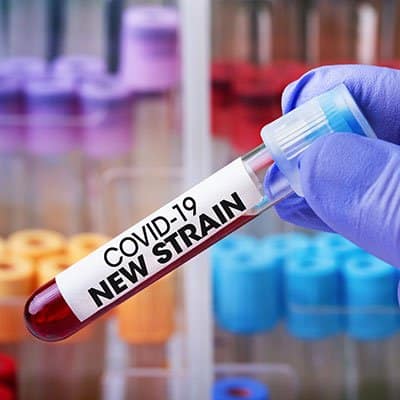
As mutations of a virus develop, new variants of the virus can emerge. As of February 2021, there are thought to be three main variants of coronavirus that have been officially named and identified, including:
- B.1.1.7: Initially found in the United Kingdom, a hallmark of this COVID variant is considered to be how quickly it spreads. Fortunately, thus far experts believe it to not make a diagnosed case any more severe or fatal than the original strain.
- P.1: This variant was identified in individuals traveling from Brazil and has spread quickly throughout the country. Scientists are still researching this variant to see what implications it may have that are different than the original coronavirus strain.
- B 1.351: Found in South Africa, this is another variant of the original coronavirus still under review by health experts to determine its impact.
What You Can Do to Protect Yourself and Others
There are some basic steps individuals can take to protect themselves and others from COVID-19, including:
- Stay home if you are sick.
- Isolate from others, even those living in your household, if you are sick.
- Wear a mask when you are out of your home or around people you don’t live with.
- Wash your hands frequently with soap and water for at least 20 seconds.
- Use an appropriate hand sanitizer if soap and water are unavailable.
- Disinfect commonly touched surfaces often.
- Maintain social distancing by keeping a distance of six feet from others.
- Avoid or limit your presence in crowded spaces where social distancing is not doable.
- Keep fingers away from your eyes, nose, and mouth.

Getting Tested for COVID-19
One of the most important things you can do to protect yourself and others is to get a COVID test if you know you have been directly exposed or if you feel like you may have contracted the disease. Some facilities have very specific times they will perform testing and it may be hard to coordinate you getting to the site during those hours.


Consider visiting your local urgent care center for COVID-19 testing. Check the urgent care’s website to see what testing process they are following. Many are offering convenient online self-assessments that may then lead to an in-person rapid results test which can give patients a result in approximately fifteen minutes or so.
As COVID-19 continues to affect the globe and new mutations are discovered, it’s important to stay informed and stay safe.

- What Is the Story of COVID - January 17, 2026
- Cultural Competency in Urgent Care: Providing Inclusive Patient Care - April 11, 2025
- Key Facts About Hormone Replacement Therapy and Women’s Wellness - March 24, 2025